
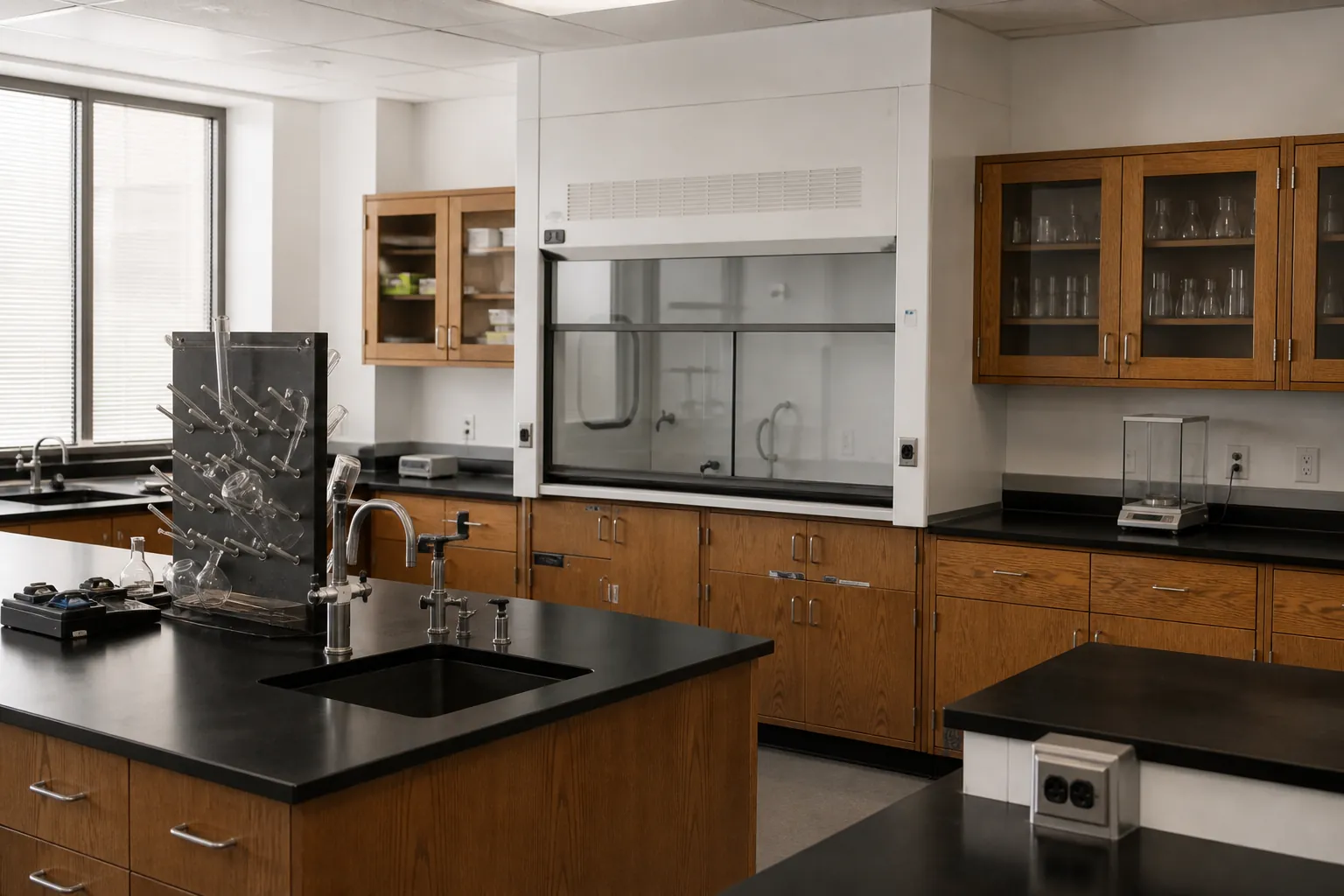
Overview of CNASR
The Center for Natural and Applied Scientific Research (CNASR) is one of players in basic research and applied science on the global stage and one of the organizations in the United States that is active in all fields of science. Its unique position as a specialist in multiple fields means that it can bring together different scientific disciplines to shed light on and gain insight into current global challenges, in partnership with public sector, social and economic stakeholders. Together the sciences are used to bring about sustainable progress that benefits the whole of society.
The Center for Natural and Applied Scientific Research supports the high level of natural science education and research, collects and manages the high-tech research equipment used to strengthen the education support system. In order to help each field of natural sciences progress, we aim to establish an environment where new interdisciplinary research can develop. Especially life science, natural science, health science, material science, and environmental science, which need to be able to use animal experiments, genetic experiments, gene recombination experiments, and other such equipment that are pertinent for all kinds sciences and technological advancement. Refrigerant provisions, low temperature technology, or radioactive isotopes used by tracer experiments for education and technical guidance, we give support to all fields of natural science education and research. Promoting school related research projects in the fields of life sciences as well as material sciences, fulfillment of extensive modern research and the development of applied research is the goal of this center.
The center provides an incubator environment for all relevant scientific research conducted by the University. By contributing to the enrichment of scientific, biological, industrial, and environmental health knowledge through distinguished research, the center assists the University in fulfilling its scientific research mission by solving scientific, mathematical, and applied problems from societal reality produce distinguished research that enriches knowledge about science, biology, industry, and environmental health.
CNASR is committed to supporting and strengthening scientific research through the provision of research tools and capabilities in order to ensure competitiveness and productivity, and to occupy a leading position among countries with a strong national economy, focused on excellence and sustainability.
Furthermore, we at the center are aware of the importance of our role in achieving the goals and aspirations of the country within the framework of its research priorities, contributing to the development of the national research, development, and innovation strategy, and participating in its ambitious national programs based on research and development.
CNASR aims to provide a distinguished and suitable scientific environment for researchers, managed by a highly qualified administrative, technical, and academic system. In addition to chemical catalysts, biotechnologies, nanomaterials, and their applications, the center has a number of specialized units with clearly stated research priorities. The center supports all research related to environmental sustainability and basic needs, which includes protection of the environment and providing humans with water, food, and energy in a sustainable manner by developing environmentally friendly technologies to supply and desalinate water, as well as modern and sustainable technologies to increase food production and space, studies of community problems and statistical models, as well as green technologies and carbon capture, use, and storage techniques.
CNASR Mission
The mission of the Center for Natural and Applied Scientific Research (CNASR) is develop global citizen scholars who are prepared to increase understanding of the natural world and applied sciences within society and to be productive and successful in their careers. We aim to facilitate constructive scientific dialogue and contribute to the development of innovative solutions for current and future challenges, all while supporting sustainable development goals.
To carry out this mission successfully, we are focused on:
- Building pipelines that ensure equitable access to education and opportunities for all members of our community
- Creating space for positive interactions that result in interdisciplinary collaborations in research and teaching
- Increasing access to undergraduate research and other interactive forms of learning
- Strengthening support for graduate students to ensure their success and quality of life
- Empowering all students to use critical thinking to ethically and skillfully solve real world problems
- Advancing research development and educational innovation to support a world-class faculty
By embracing these values, we will serve as a catalyst to increase literacy in both natural and applied science and create informed citizens who will steward future generations into a sustainable world.
CNASR Vision
At the Center for Natural and Applied Scientific Research (CNASR), we aspire to be a leader in research, scientific development, excellence in teaching, scholarly productivity, and professional and community service. We aim to be a hub of innovation and a source of inspiration for the scientific and industrial community, all while promoting a sustainable and interdisciplinary approach.
CNASR Values
We value:
- Belief in Teamwork
- Our students and their success
- Social Responsibility
- Active learning, academic rigor and critical thinking
- Excellence in teaching, research and service
- Accountability
- Inclusiveness, fairness and justice
- Faculty, staff and administrators
- Personal and academic integrity
- Safe learning environments
- Collaborations and partnerships; and
- Continuous improvement.
CNASR Strategic Goals
- Increasing financial resources and diversifying income sources to support the Center's continuous development.
- Achieving the University's strategic goal of encouraging and supporting scientific research.
- The dissemination of a culture of scientific research and innovation to researchers and graduate students through seminars and workshops.
- Providing the appropriate environment for qualitative scientific research.
- Adopting research priorities resulting from the problems of society and finding appropriate solutions to them that serve the national strategic objectives.
- Follow up on global and local research trends and developments, and guide researchers to them.
- Coordinate the participation of researchers in national research directed at the region's most pressing challenges.
- Cooperation with scientific research centers in various universities and industrial and technical institutions.
- Engaging with business sectors and national research centers in research and innovative partnerships.
- Promoting the concept of comprehensive quality and continuous improvement in all the activities of the Center and the services it provides.
Research
The Center for Natural and Applied Scientific Research (CNASR) fosters and promotes fundamental research – research that is curiosity driven, or that has a long lead time to application. From a base in mathematics, computer science, technology, natural science, basic science, and statistics, our purpose is to bring together diverse thinkers and be a voice for public engagement.
The deepest problems facing society and humankind require not just refining and enhancing existing knowledge, but the development of fundamental new ideas. Evidence from the past and present abounds. Every aspect of our existence now has been enormously impacted by theoretical endeavors—from the quantum understanding of atoms and chemistry to the musings of Alan Turing as he developed the conceptual basis of modern computing and artificial intelligence.
Indeed, the vast majority of the major transformations which have led to our prosperous modern society originate from, or were supported by, fundamental research which at the time of discovery seemed to have no immediate impact. We see a need to
3. Increase the awareness of government and society of the importance of fundamental research.
1. Ensure people have a license to engage in curiosity driven research and
2. Support interactions between fundamental and applied researchers.
CNASR Research Focus
At CNASR, we focus on four key thrust areas:
Nanobiotechnology and Material Sciences:
We're advancing knowledge and developing technologies at the intersection of biology and nanomaterials to create efficient, sustainable technologies and therapies.
Life Sciences:
We're seeking to understand life at its most fundamental levels, from molecular and cellular biology to the investigation of genetic diseases and the development of new drugs.
Environmental, Agricultural, and Food Sciences:
We're seeking sustainable solutions for food production and agricultural practices, while addressing key environmental challenges related to climate change, pollution, biodiversity loss, and sustainable development.
Energy:
We're exploring new and renewable energy sources, researching fuel cells, photovoltaics, energy storage, and energy efficiency
Our innovations
The CNASR encourages and supports technology transfer, in which research results are transformed into concrete and long-lasting innovations that benefit both companies and society.
Research as the source of innovation
Innovation at the CNASR means drawing on outstanding results from scientific research to develop new products and solutions that will tangibly change lives. Every year, CNASR and its partner laboratories produce remarkable breakthroughs. A conscious and deliberate innovation policy helps these breakthroughs to progress through to society.
Innovation at the CNASR
The CNASR's innovation policy is based on 3 major areas:
- Strengthening links with the economic sphere.
- Protecting the intellectual property of inventions.
- Supporting the creation of start-ups.
Innovation and Research
The pillars of the Center for Natural and Applied Scientific Research's vision, and from here, the center is implementing a precise plan to improve the number and quality of scientific papers and is also keen to increase the rate of publication and citation among the University faculty members to achieve its goal of being one of the best innovation and research private centers in the United States and globally.
It also has an infrastructure of specialized scientific and research entities represented by specialized entities, including supporting research and innovation sector, specialized research centers and laboratories, and research excellence chairs. The center is also interested in protecting, recording, marketing, and transforming promising ideas and inventions into commercial or industrial products. The CNASR innovation and research include Statistical Model; Renewable and Sustainable Energy; Environmental, Quality, Marketing & Communication; Laboratory Unit; Catalysis; Ecology and Environmental Biology; Nanomaterials Technology; Marketing and Communication; Administration, Finance & Governance and Core Laboratory
Specific Innovation and Research Units
Statistical Models Unit (SMU)
The Statistical Models Unit plans to participate efficiently in the national progress by creating favorable research aligned with the University vision. Within this vision, the Statistical Models Unit aims to produce Artificial Intelligence and data science research (i.e., Machine learning and statistics), which are considered the main pillars of Industry 4.0.
The unit's objective is to enhance research quality by supporting researchers in different scientific areas through joint research projects (i.e., Chemistry, Biology, Engineering, Medical applications...), in addition, to have high-level applied research partnerships in different fields with industries in order to expand private sector joint investments for future development.
Renewable and Sustainable Energy Unit (RSEU)
The Renewable and Sustainable Energy Unit (RSEU) is a unit established to develop strategies and policies promoting increased adoption of clean energy. The key objectives of the unit are to identify and implement energy efficiency strategies for industrial, commercial and residential users of electricity, formulate guidelines for the design and maintenance of hydrogen production and photovoltaic power systems, demonstrate knowledge of strategies to reduce greenhouse gas emissions: CO2 capture and management, assess the economic and environmental benefits of utilizing sustainable energy resources
Environment Unit (EU)
The Center for Natural and Applied Scientific Research (CNASR)Environment Unit (EU) conducts environmental impacts assessments and can monitor land and water biodiversity and water quality. It also works with communities to assist them in the development and implementation of resource management plans.
Quality, Marketing & Communication Unit (QMCU)
The Quality Marketing and Communication Unit (QMCU) specializes in the development and the maintenance of the quality system at the center to ensure that it maintains compliance to international standards. The QMCU provides training and consultancy services to other laboratories in the United States and globally to obtain international accreditation and it also conducts external quality audits.
The QMCU also offers Equipment Calibration Services and coordination of Information Technology Services, Strategic Plan Monitoring and reporting, equipment inventory, workshops, training and conferences support.
Mathematical Studies of Real-Life Problems Unit (MSRPU)
Mathematical Studies of Real-Life Problems Unit plays a fundamental role in the description of a large part of phenomena in the applied sciences and in several aspects of technical and industrial activity. In this unit, we shall deal with general rules coming from real-life problems such as continuum mechanics, physics, chemistry, biology, ecology, medicine, etc.
Laboratory Services Unit (LSU)
The analytical Laboratory Services Unit at the Center for Natural and Applied Scientific Research (CNASR)is an internationally accredited laboratory that offers a wide range of services in the analyses of foods, feeds and water to its customers. There is also a biofuel section which is capable of carrying out various tests in bio-diesel as well as paraffin diesel at international standards. The laboratory also carries out a limited scope of soil testing.
Catalysis Unit (CU)
Our research interest is the utilization of the unique properties of metal nanoparticles for the design of heterogeneous catalysts with high control of composition, size, morphology, and chemical properties. In addition, our research activities extend to cover the design of environmentally friendly downstream processes, i.e., to upgrade the product quality (solar refinery, cross-coupling reaction) or to degrade most recalcitrant pollutants in water.
Ecology and Environmental Biology Unit (EEBU)
The Ecology and Environmental Studies unit seeks to identify and solve local, regional, and national environmental issues. Our unit is dedicated to studying biological diversity at all levels in terrestrial and marine habitats. We aim to enhance the African environmental conditions by alleviating anthropogenic and climate change impact.Special attention will be directed towards identifying fisheries' parasitic burden, studying insect biology and ecology, understanding detoxification mechanisms, and fertility of desert animals.
Nanomaterials Technology Unit (NTU)
Th eNanomaterials Technology Unit is a research plan undertake by the center to reduce dependence on petroleum resources, diversify its economy, and develop public service sectors such as health, education, infrastructure, recreation, and tourism. This unit aims to manufacture high-quality nanomaterials for use in many industrial and environmental applications, and energy uses to adapt to the modern national trend. Much attention has been paid to the production and the storage of energy from various sources such as water, solar energy, wind, petroleum, and others.
Marketing and Communication Unit (MCU)
The Marketing and Communication Unit (MCU) is responsible for managing the CNASR brand and reputation and for developing organization-wide strategies, policies and procedures to guide communications and its integration into CNASR’s scientific and technical programs.
Administration, Finance & Governance Unit (AFGU)
The Administration, Finance and Governance (AFG) Unit promotes strategic and responsible stewardship of resources (both human and financial) to achieve operational excellence. It aims at achieving operational efficiencies through assessment and continuous review of priorities, realignment of resources, and by adopting a lean strategy. It also ensures the well-being of CNASR staff through the creation and deployment of professional development programs aimed at enhancing staff skills and leadership.
Core Labs Unit (CLU)
The Center for Natural and Applied Scientific Research (CNASR) Core Labs function as a platform to support the research ambition of the University. The labs provide analytical services to IIU research community on a wide range of advanced analytical instruments and the facility includes:
- Characterization Lab
- Material Science Lab
- Scanning Electron Microscope (SEM) Lab
- Chemistry Analysis Lab
- Chemistry Analysis Lab
- Biochemistry Lab
- Bioscience Lab
- Electronic and Computer Studies Lab and Simulation Programs.
- Histological Studies Lab
- Microbiology Lab
- Microscopy Lab
- Molecular Biology Lab
- Nuclear Magnetic Resonance (NMR) Lab
Services
The Center for Natural and Applied Scientific Research (CNASR) offers a variety of services as part of its purpose to assist researchers and ongoing projects, enabling them to carry out high-quality research through:
- Research - The center offers opportunities for research on the natural world and environmental challenges.
- Education - The center offers programs in disciplines like physics, chemistry, biology, and environmental science.
- Editorial research boards: CNASR faculty members serve on editorial research boards
- Research support - CNASR faculty members receive scholarships and grants for their research proposals
- Seminars and workshops - CNASR organizes and participates in seminars and workshops
- Conferences - CNASR organizes and participates in national and international scientific and pedagogical conferences
- Chemical and Consumables - CNASRprovides chemicals and consumables to researchers in accordance with the strategic plan of the center's units
- CORE LAB laboratories - CNASRanalyzes of samples on public devices in the CORE LAB laboratories at the Center.
- Sample for Analysis -CNASRprepare samples for analysis on specialized and general devices according to the Center's controls.
- Imaging Services -CNASRprovide imaging services using the scanning electron microscope device according to the center's controls.
- Digital Imaging - CNASRprovides imaging services on the DIGITAL imaging microscope device for tissue slides according to the center's controls.
- Consulting Services -CNASRprovides consulting services in the design of the study, calculation of sample sizes, development of a statistical plan, and conduct of descriptive and inferential statistical analyses to ensureappropriate statistical analysis.
Research and Collaboration Opportunities:
The CNASR is interested in building new collaborations with academic institutions, scholarly associations, academic institutions, public-private partnerships and private companies for the study of natural products to discover new Pharmaceuticals, Agrochemicals, Flavorings & Preservatives or Cosmetic Ingredients.
We can offer the following to our prospective partners:
Natural Product Libraries:
The CNASR maintains growing libraries of diverse high quality natural product extract and pure compound libraries in formats suitable for immediate bioassay and analysis in partner’s bioassays.
Natural Products Chemistry:
The CNASR has well equipped natural product and analytical laboratories and can perform natural product extraction services, bioassay-guided purification of active metabolites and the isolation of gram quantities of metabolites required for more in-depth biological testing or to support semi-synthetic programs. The CNASR can perform new marine microbial strain isolation, characterization and preservation. We are building facilities to support small scale fermentation and strain and process improvement for yield improvement of bioactive metabolites.
Bioassay Support:
The CNASR has established in-house bioassays for general toxicity and for identifying extracts/compounds active against drug resistant pathogenic bacteria and fungi. We can provide extract and compound libraries for bioassay at our partner’s facilities or bring new assays in-house for testing in our facilities. We are especially interested in collaborations aimed at the discovery of potential new drugs for the treatment of Neglected Tropical Diseases.
Government Liaison:
The CNASR can liaise with relevant government agencies & local communities to obtain all necessary permits and agreements for the collection and export of natural products within and outside the United States that support IARSAC International University. The Center for Natural and Applied Scientific Research’s collection policy adheres to the principles laid out in the United Nations Convention on Biological Diversity
Logistical Support:
The Center for Natural and Applied Scientific Research (CNASR)can provide all planning and logistical work required to support field work for the collection of natural products in the United States and globally. This also includes preliminary taxonomic identification of both marine and terrestrial specimens among others.